
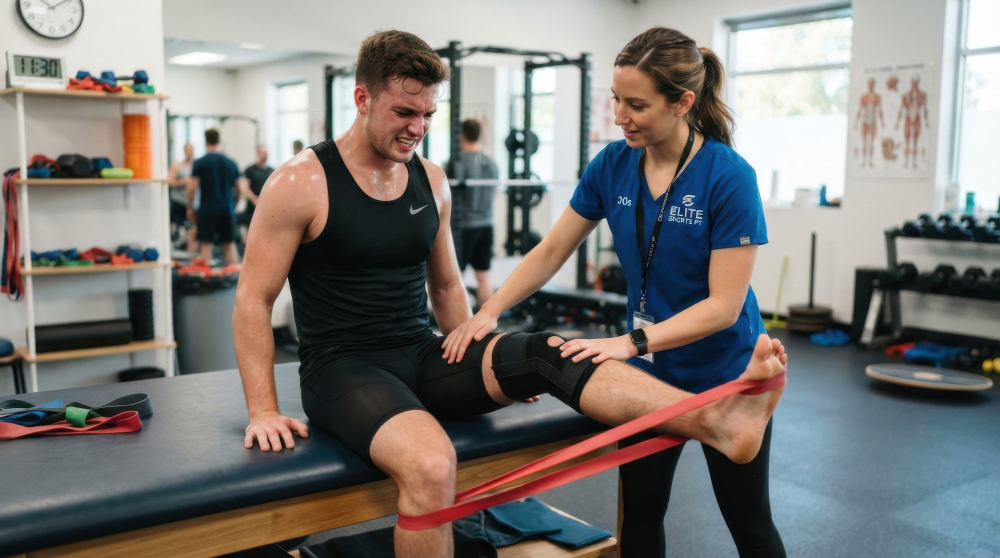
What Is Sports Injury Rehabilitation?
Sports injury rehabilitation is a step-by-step process that helps people recover from injuries caused by sports or exercise. It aims to restore strength, movement, and function. Often, it includes special exercises, rest, and expert care. For many, sports injury rehabilitation is key to a safe return to activity after injury. In some cities, you can find clinics that focus on sports injury rehabilitation for athletes and active individuals.
Common Types of Sports Injuries
Many types of injuries can happen during sports or exercise. However, some are more common than others. Knowing these can help you spot problems early. Common sports injuries include:
Each injury may need a different approach for healing and rehabilitation.
Recognizing Symptoms and When to Seek Help
It is important to know the signs of a sports injury. Early action can speed up recovery. Common symptoms include:
Sometimes, you may need to seek medical help right away. For example, if you cannot move the area, see a bone sticking out, or have severe pain, visit a doctor. According to the CDC, quick care can prevent further damage.
Steps in the Rehabilitation Process
Rehabilitation for sports injuries usually follows a set path. Although each injury is unique, most plans include these steps:
Throughout the process, a physiotherapist may adjust your plan. This helps you recover safely and avoid setbacks.
Evidence-Based Treatment Approaches
Experts use proven methods for sports injury rehabilitation. According to the World Health Organization, these may include:
In some cases, doctors may suggest medicines or surgery. However, most people recover with non-surgical care.
Safe Return-to-Activity Guidelines
Returning to sports too soon can cause re-injury. Therefore, it is important to follow safe return-to-activity guidelines. These may include:
Always listen to your body. If pain or swelling returns, stop and seek advice.
Tips for Preventing Re-injury
After an injury, you can lower your risk of getting hurt again. For example, you can:
Additionally, regular check-ins with a healthcare provider can help spot problems early.
Lifestyle and Home Care Advice
Good habits at home support sports injury rehabilitation. For instance, you can:
Furthermore, staying positive and patient helps the healing process. If you have questions, consult Dr. Syed Jani . They can guide you through each step of recovery.